Saturday, August 14, 2010

Spending Time with the Waira Churis


Felipe and his colleague Arturo picked us up (in a replacement truck) on Friday August 6 and drove us out of Quito over the Andean continental divide towards Archidona. Along the way we stopped at the Guango Lodge to view their hummingbirds. It was amazing; we have never seen anything like it. There must have been at least 100 hummingbirds. They were eating from flowers and feeders, and there were many different varieties. You could get extremely close to them to photograph them. One of them even landed on my head! One species had an extremely long beak, and had to fly while eating because his beak was too long for him to sit on the perch! We sat outside and had some coca tea and cookies while enjoying observing the hummingbirds.

Hummingbird at Guango Lodge
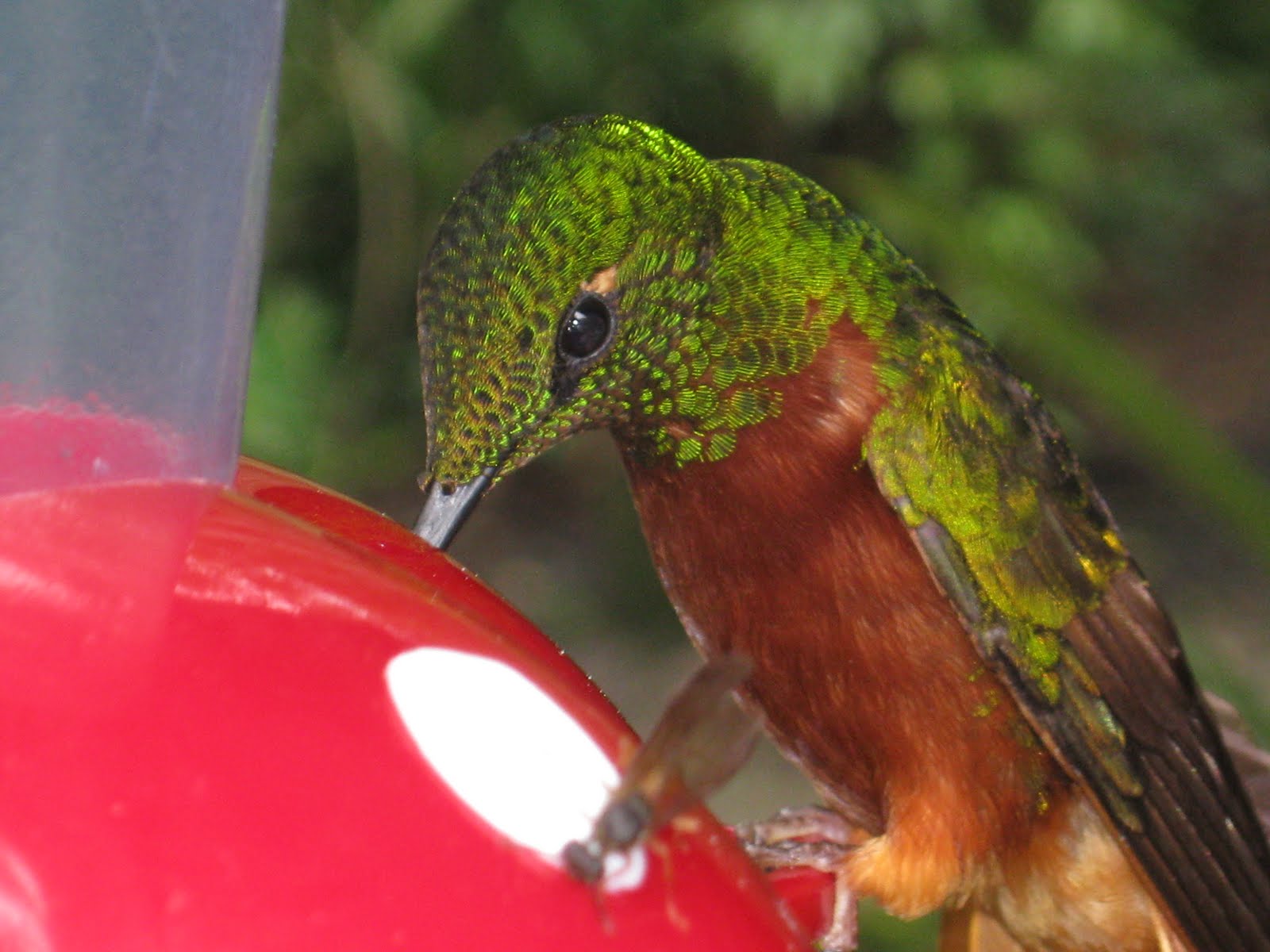
Hummingbird at Guango Lodge

Hummingbird at Guango Lodge

We continued along our way and stopped in Baeza for lunch. Felipe said that we stopped there because the next good restaurant was 'a billion kilometers away.'  We drove the rest of the way to Archidona, and stopped to pick up a boy named Herman. We then drove for 45 minutes into the jungle on a gravel road to a trail head, where Arturo dropped the four of us off. We followed the trail for about half an hour and around 4 pm came to a clearing in the jungle where there was a flat expanse of land dotted with several bamboo and wood plank huts. We were introduced to Carlos and his wife Maria. We knew that we would be spending time with 'the Waira Churi people', but we hadn´t really been able to find any information on who they were. We had thought that they were a tribe all their own. But once we arrived and spoke with Carlos, we learned that they are really a single large family of Kichwa people. Carlos is the grandfather, and his own grandfather had been a famous yachak shaman named Vicente Salazar who taught him many of the ways of the jungle. Fearing that their culture will be lost, Carlos has established this 'camp' in the jungle where his family accepts guests and practices and demonstrates their age-old customs. Carlos lost his mother in a river accident when he was very young, and viewed himself as raised by the wind, so he named his family clan the Waira Churis in the Kichwa language. He told us a  lot of stories and demonstrated a lot of customs for us, and we think that this is a very honorable thing. We hope that they can get support from some kind of foundation so that they can expand their venture; currently everything they do is self-financed and managed.

Carlos and Maria

Carlos harvests a palm tree

Carlos harvests the heart of palm

Although most of Carlos' 10 children and their children live in Archidona, they come to this camp area to receive guests and they all stay overnight as a little community. Our accommodations consisted of a basic yet comfortable wooden hut with beds, sleeping pads, and mosquito nets. Their little bamboo outhouse had an actual toilet bowl (only) which you would manually flush by pouring a bucket of water down it. We were quite impressed with this. All in all it was far more comfortable than we had originally expected. There was even a little grotto area with naturally running water that we could use for a (cool) shower.


Michael holds a kitten

Baby Tamia takes Tony the puppy for a "walk"

Lorena the parrot checks out Felipe's camera

Bamboo hut
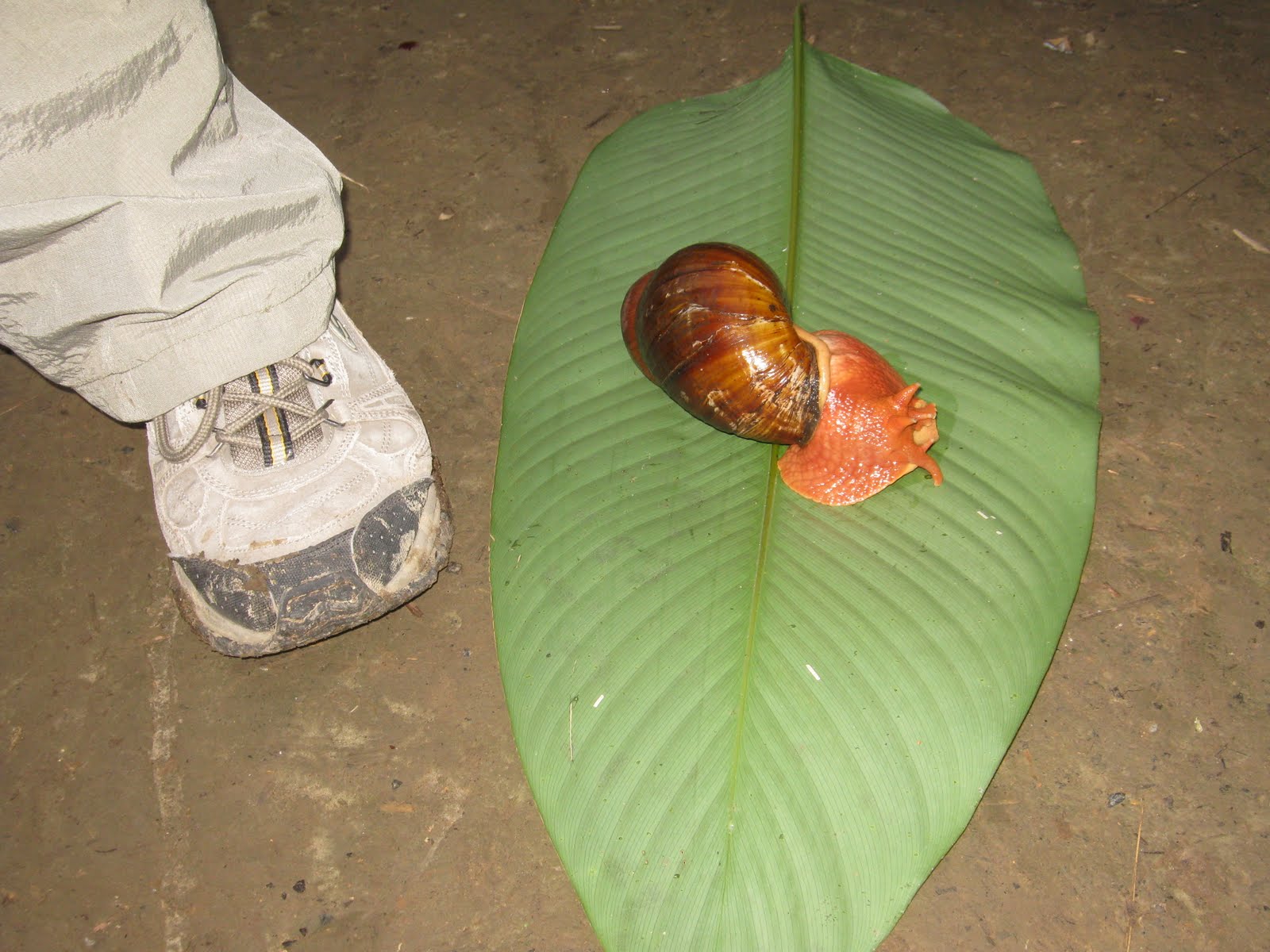
Snail (to scale)

Dinner is served on banana leaves

Carlos was very excited to show us his world, and like a kid he couldn´t decide what to show us first. We saw some very ugly and scary looking caterpillars, a huge snail as big as a conch,  a perfectly round rock that his son had found at the bottom of a nearby waterfall...it was like show and tell and we struggled to absorb it all and reveled in all of our newfound knowledge.

The women cooked us traditional meals served on banana leaf plates. Carlos played us a song on his reed flute (he and the family only use flutes and drums (percussion, sometimes made of turtle shells) rather than post-Columbian instruments such as violins and guitars. He and the family enter musical competitions and often win. The culture here is very much sun up to sun down, so after chatting with Carlos everyone went to bed at around 8:30.


Carlos burns some natural copal incense he found on the way to the waterfall

The next day, we had breakfast and at around 9 am headed off on a 'one hour hike' to a sacred waterfall. Felipe warned us that the Kichwa conception of time and distance can be a bit...different...than our own, and this turned out to be the case. It was a rather steep downhill hike through the jungle, and after an hour walking at a liesurely pace, stopping to look at various medicinal plants, we reached the river. We had to cross it and thought that the waterfall must be nearby, but it wasn´t. We continued upstream for an additional hour and a half, scurrying over slippery rocks and up and down muddy slopes. Les Stroud (on his Survivorman TV show) often says that in a survival situation, 'if you sweat you die.' Well, if that were the case today, Craig and I would both have been dead. I totally ran out of energy and was sweating up a storm. I had visions of being left for dead and not even being able to make it to the waterfall to begin with, let alone making it back to camp! But I struggled on and we eventually arrived at a beautiful 3-tiered waterfall. Carlos and his family whipped together a sturdy ladder from bamboo and vines and climbed up the waterfall. I was in no shape to do that and we weren´t sure the ladder would hold our weight anyway, so Craig and I swam in the pool below the waterfall (schistosomiasis be damned!) There were many different beautiful butterflies here, including the ethereal blue morpho. They enjoyed using our clothes as their own private salt lick while we were swimming. After spending a nice time at the waterfall, we headed back to the camp. If going downhill was bad, going up was worse and on some steep slopes the young men even had to tow me up. How embarrassing! But I´ve never been so happy to hear a rooster crow in my life as I was when one signaled our appoach to camp shortly before sundown. Lunch had been waiting many hours for us, and the entire venture had lasted from 9-5:15 (an entire work day)! Next time, we highly recommend bringing lunch with us.


Hiking to the waterfall

River crossing
The Waira Churis climb a homemade ladder up the sacred waterfall


After eating we took a much-deserved outdoor 'shower' and were feeling like ourselves once again. The kids showed us their fireflies, which have two 'headlights' in the front and one light in the back. Everybody was exhausted, even though the hike was much easier for all of them, and by 8pm we were the only ones still awake, sitting on a bench in the dark, taking in our surroundings.

The next morning we hung out at the camp while Felipe and Carlos went for another hike to see the cock of the rock birds. We had brought a Frisbee and played with the kids, which was a lot of fun.  The family taught us how to weave headbands out of palm leaves. Some of the younger kids were swinging from a vine and convinced me (against my better judgment) to give it a try. I couldn´t hold my weight and slid down the vine, skinning my fingers, much like a bad rope burn. Upon close examination I realized that I had taken several layers of skin off of my fingers, and that this was going to become an issue. When Felipe got back from his hike he got out his first aid kit and helped to clean my wounds. He then asked the Waira Churis for some sangre de drago (dragon´s blood), sap from a particular tree (which we learned about yesterday) which helps wounds to scab. After they inspected my injuries, someone quickly ran off and returned with a cup full of the stuff, which actually did look like blood. Felipe instructed me to rub it onto my wounds in a circular motion until it turned from scarlet to creamy white, and got a gluey consistency. Within minutes, the sting went away and I could see improvement. Rather than using creams and bandaids which would not let the wounds dry out, this created a 'second skin' coating and allowed them to dry out. I would need to be careful using my fingers, but this stuff was a godsend. I joked that I had done this on purpose in order to test out their traditional medicine. My conclusion was that the tribal remedy worked beautifully and I can´t believe how well and quickly my fingers healed. Carlos' and Maria´s faces are painted with traditional designs using the dark gray paste extracted from a palm tree. They asked if we wanted our faces painted in the same manner. We did, and  Carlos' and Maria's son Edmundo did it for us. They said it should last 3 weeks, and we laughed thinking about showing up at work with what looks essentially like a tattoo on our faces. However, after sweating a lot in the next week, it would pretty much be washed off before we even arrive home.

Israel playing frisbee outside the guest house

Weaving lessons

Anna (11) and Sacha (7)

Edmundo paints Craig's face

My injured fingers

We had a nice lunch and then Carlos and the family took us into the woods to demonstrate 4 different types of traps that they would use in the jungle for hunting animals. Using nothing but a machete and materials found in the jungle, they showed us traps which were amazingly efficient and versatile. One snare was so good that it trapped one of their unsuspecting chickens...twice!! We heard snap, whoosh, cluck cluck! We all turned to see the chicken dangling in the air helplessly. We all got a good laugh out of this and quickly released the slightly traumatized chicken. They reset the trap and  minutes later the same chicken was caught again! Even more laughter. No question about the efficacy of the traps. There was another trap which created almost a guillotine and snapped down with such force that Carlos said that it had often cut a snake in two. Felipe tested the trap with his shoe, and could barely extract it afterwards. After two more traps, they demonstrated their blowdart gun. They took arrows and affixed a cotton-like substance from a ceiba tree, loaded it into the gun, and blew it at a target made from yucca and a leaf.  Carlos demonstrated his prowess by routinely hitting the yucca. They let us each try and we actually hit the leaf, but our arrows didn´t penetrate the yucca. It was easier to use than I had expected.

 Carlos sets a trap

Carlos prepares to load the blow dart

Steph shoots a blow dart

We sat in one of the bamboo huts and Carlos played his flute while Maria sang. Felipe played along on a flute and drum in turn, and it was a nice relaxing musical interlude. Carlos asked if we would like to enact a Kichwa wedding ceremony. Felipe told him that we had just celebrated our 12 year wedding anniversary, and Carlos and Maria got very excited. They ran to get clothing to dress both of  us as the rest of the family gathered and
donned their traditional outfits and headbands that we had woven earlier in the day. Craig wore Carlos´ feathered crown and I had a red veil over my head. A woman stood on either side of me and joined arms with mine. Men did the same with Craig. These symbolized our godmothers and godfathers, who would give us away for marriage. Carlos played a song and we danced, approaching one another and then backing off, until they officially handed me over to Craig, and transferred the feathered crown to me. It was very sweet that they had wanted to do this for us.  This day was very much about us becoming closer to the family, and we are so glad that we added this additional day to the itinerary

Craig does laundry in the "shower"

 Carlos serenades us in one of the bamboo huts

Our Kichwa wedding party

After a light supper, the sun set and we sat in a covered pavilion area for a ceremony. We sat in the dark around the coals of a fire and Craig and Felipe drank a cup of a traditional ceremonial drink made from various jungle plants. Approximately half an hour later, Carlos called each of us one by one to sit in front of him for cleansing. He chanted hypnotically and patted us with a bundle of leaves. He breathed onto our heads and blew smoke all around us. It was an intense surreal  personal experience. It sent shivers down my spine.
We all sat in dark silence until the ceremony was finished, at which time Carlos re-lit candles and everyone eventually wandered off to bed. Craig gazed at the stars while standing all alone in the middle of camp on his way back to our room. It had been cloudy for much of the trip and Craig wasn´t going to give up this opportunity to see some stars. Tonight was a late night, and we went to bed at 11:30 and fell into a deep sleep.

 Carlos prepares for the ceremony

Craig drinks the ceremonial drink

The next morning, we packed up our things, and Carlos' family packed up theirs. We had a quick breakfast and then walked down the path back to the gravel road. Arturo was there in our fixed white LandCruiser to pick us up. (It turned out that the problem had been an internally broken wire to the alternator). We said goodbye to the family and heartily thanked them for everything. We gave Maria a ride back to Archidona (Carlos was staying at the camp) while the rest of the family walked back to their homes in Archidona, their weekend at camp having finished. We are so lucky to have been able to spend time with this family. We highly recommend this experience and we wish them continued success in this venture. The accommodation was comfortable and the food was far beyond expectation, both in quality and quantity. We had delicious soup with every meal and never felt hungry. With our heads swimming with all of the experiences of the past few days, we were now ready to head to the Amazon...
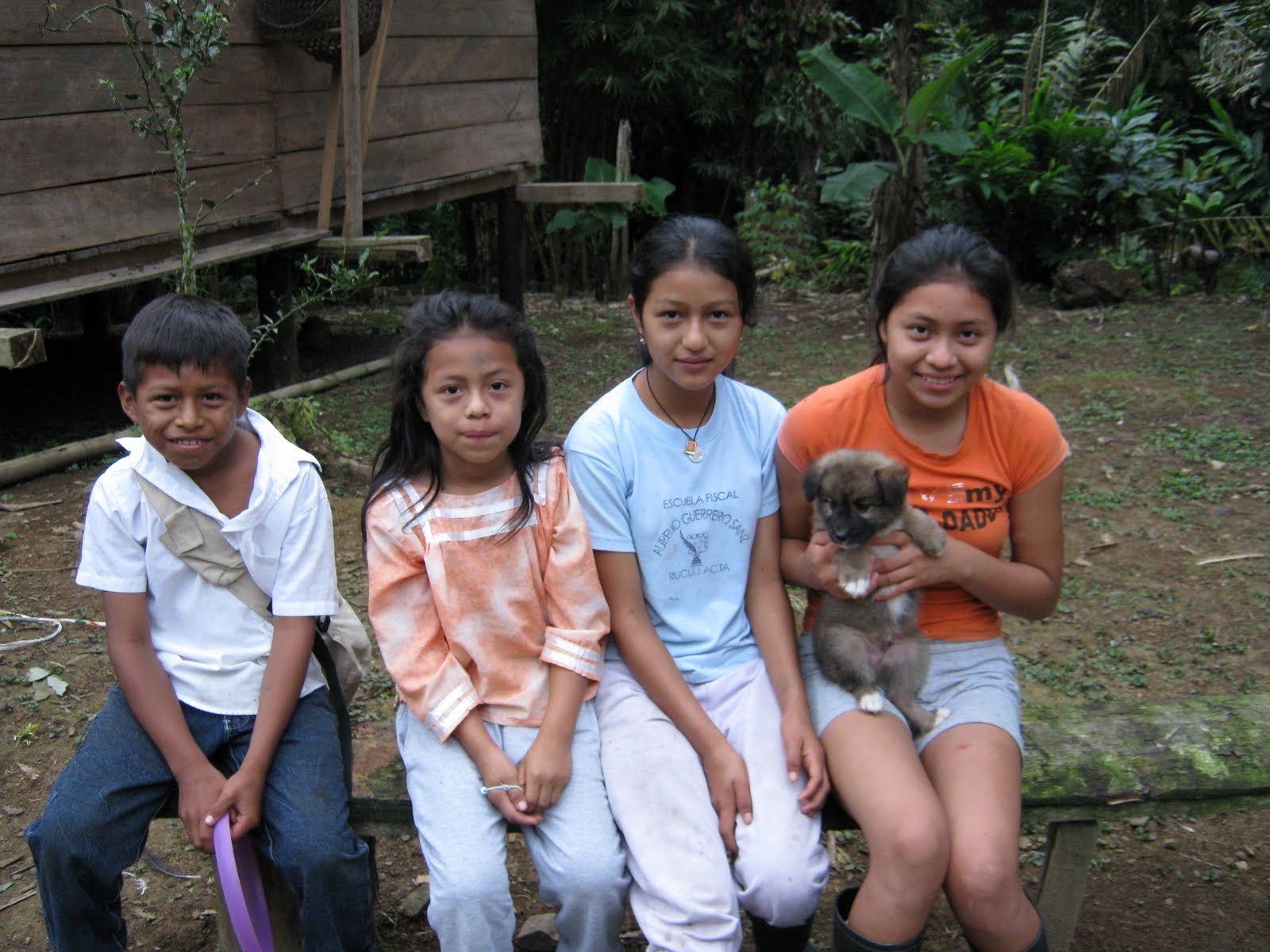
 Israel, Sacha, Vanessa, Jennifer, and puppy Tony

 Steph, Felipe, Maria, and Craig as we leave Archidona

Thursday, August 05, 2010

Six Days in the Highlands of Ecuador


On Saturday morning, we had another nice breakfast at Casa Aliso, and then were picked up by our guide, Felipe. We had met him over dinner in the Galapagos two years ago, and it was nice to see him again. He drove us for approximately 2 hours to Otavalo, where their Saturday market was being held. Streets were closed off to make room for more market stalls. We wandered around for a few hours and bought a few items. Although there were a lot of other tourists present, there were plenty of interesting things to see, and many locals as well.
Felipe

Then we went to the Runa Tupari Tours office, where we were introduced to Antonio, a Kichwa man from the local community of Morochos. We would be spending the next five nights in the guest house at his family´s farm. Antonio took us to lunch at a restaurant called Inty Huasi. We learned that he is the director of a traditional band and that he plays many instruments.

Otavalo Market Seller

After lunch we drove to San Rafael, a nearby community on lake San Pablo. Tortora reeds grow in the lake and are used by local artisans to create mats, baskets, and other items. We learned how the reeds are harvested and processed. Then we went to a workshop to see a woman weaving mats from the reeds, using a rock to flatten them out.

Weaving a tortora reed mat
Next we went to a musical instrument workshop in Peguche. A woman demonstrated how to create a zampoña (pan flute) out of reeds. She also showed us other traditional Andean instruments such as flutes and tarkas, and small guitars made from armadillo shells. Antonio demonstrated how these instruments were played.
Making a zampoña

Our last stop was Carabuela, where we visited a master weaver named Jose Carlos de la Torre. He and his wife demonstrated how they process raw wool and spin it into thread. He then weaves it using a traditional backstrap loom. It was a very interesting demonstration and he did beautiful work. We purchased a beautiful hand-woven wool scarf for a very affordable price.

 Weaver Jose Carlos de la Torre


Jose Carlos de la Torre and his granddaughter

Then we headed through towns such as Cotacachi and Quiroga to the more rural Morochos. We arrived at Antonio´s house, where we met his wife Rosa, daughter Aida, and 2 year old granddaughter Kehli (often called by her middle name, Sisa, which means flower in Kichwa). They showed us to our room, in a small 2 apartment guest house which we shared with Felipe. It was lovely, and had a private bathroom and fireplace.
Casita (guest house)

Their property was a picturesque small farm, with gardens, chickens, two cows, a kitten, and a dog named Max. Kehli was adorable and kept us all laughing, even when the language barrier created occasional quiet moments. The surroundings were gorgeous, with views of mountains in all directions.

Kehli

Antonio and his band, Chaski Ñan, were practicing for a performance tonight. We enjoyed watching them play, as Antonio changed from instrument to instrument. He told us that his favorite to play is the violin, yet he was very adept at everything he picked up, including flute, zampoña, and guitar.

Antonio

Antonio and Chaski Ñan

Rosa and Aida prepared the first of many delicious dinners for us: potato soup, chicken, rice, beets, and melloco. Anthony Bourdain was right; the soups and stews of Ecuador are outstanding. It is early to bed and early to rise in this land with 12 hours of daylight.

Rosa, Craig, Felipe, Antonio, Aida, Kehli


 View behind our casita
View of Cayambe Volcano View behind our casita

The next day was our 12th wedding anniversary, and we would spend it in typical fashion (for us, anyway!) After a nice breakfast with the family, we went on a hike with Felipe and Antonio to the  nearby volcano Fuya Fuya. The hike started out at Lake Mojanda at approximately 3700 meters in altitude. Since we live at sea level, this kind of altitude was  a switch for us, and our breathing was quite labored. We found it difficult to catch our breath as we hiked up the sometimes steep and muddy slopes. It was a beautiful hike with clouds coming and going throughout the morning. We saw lots of interesting plants and flowers, some of which have medicinal properties and are used by the Kichwa people. When we finally made it to the summit, we were at 4265 meters (almost 14,000 feet)!! We were feeling quite impressed with ourselves.

Lake Mojanda

Felipe and Antonio take a snack break while hiking Fuya Fuya

Fuya Fuya hike
Summiting Fuya Fuya

It started to rain on the way down, but luckily we had already descended the steepest parts of the trail, which were becoming more and more muddy. The incredibly fertile soil here was black and very slippery.  We drove back to Otavalo and had another lunch at Inty Huasi before returning to Antonio´s house. We had a fun afternoon hanging out with Rosa, Aida, and Kehli. After another fantastic dinner, Kehli kept herself (and us) entertained by playing with a small beetle. We couldn´t imagine kids at home being occupied for hours by a simple insect.

Monday was a low key day, which was nice after our long hike yesterday. Rosa and Kehli took us for a walk around Morochos. It is a very friendly and well-organized community of about 900 Kichwa inhabitants. We went to their community center, where we saw an early childhood program, as well as women weaving with the wool from the communally owned alpacas.

Community Center in Morochos

Rosa and Kehli

In the afternoon we went with Rosa and Kehli to the nearby town of Cotacachi, known for its leather work. We browsed in the stores and Craig bought a very affordable belt and wallet. On the drive back, Kehli was very intrigued by Felipe shifting gears, and tried (unsuccessfully) to shift the truck into 4wd a couple of times.

 Cotacachi

Cotacachi

When we got back to the house, we showed the family some photos that we had brought from home. This really helped to break the ice, and got us all chatting. Kehli especially liked the picture of our cat Brownie, and she hugged and kissed the photo. Photos of us with mountain gorillas were also a big hit.  After laughing and joking, we all started to feel like one family. We had another lovely dinner and Felipe talked tourism with Antonio.

The next day, Rosa and Kehli took us to see many community projects. We went to a plant where local farmers bring fruits such as goldenberries, blackberries, sambo, and peppers to be dehydrated or turned into jellies or paste.  After that, we went to the women´s center where midwives are available to help pregnant women and to diagnose maladies by reading guinea pig entrails. There is also a computer lab here. The purpose of the center is to keep women (from about 35 different communities) educated in traditional ways as well as introducing them to new technologies. Then we went to an ethnobotanical garden, where we were educated about many medicinal plants. Local people can obtain seeds here to plant in their own gardens, and Rosa told us that many of her plants had originated here. We were really getting a feel for how well-organized the communities are, and how everyone helps one another.
Ethnobotanical Garden


Frog at Ethnobotanical Garden

We had another lovely home cooked meal for lunch and then went for a drive with Felipe, Rosa, Aida, Kehli, Delia and Celestina (cousins from next door) and their young brother. We drove up a dirt road to where we could see the communal alpacas high in the mountains above us. While there we saw two rainbows. Aida explained that both of these rainbows were feminine in Kichwa belief, because they weren´t very bright and didn´t touch the ground. The late afternoon sunlight was gorgeous, and we took many photos.

Aida and Rosa

Kehli and "wah wah"

After Antonio got home, we (Felipe, Rosa, Antonio, Kehli, and Delia) went to see the local shaman, Taita Manuel Flores. He lived in a very traditional home of adobe walls with a straw roof. We were led into a dark room and sat on wooden benches. We brought offerings of medicinal plants, cigarettes, and a candle, and the 88 year old shaman demonstrated how a traditional healing would be done. He admitted that he is now too old to do healings on a regular basis, as it takes too much out of him. But he would demonstrate how it is done (the community is concerned as no one has yet been fully trained as a successor). The shaman chain smoked the cigarettes and took mouthfuls of liquor which he then spit on rocks, candles, and the medicinal plants. We had to rub the wax from an unlit candle onto our hands and heads, and he chanted a mixture of traditional Kichwa and Catholic incantations. Craig was mesmerized. Antonio demonstrated how they would pat Kehli down with the medicinal plants if she were sick. At the end of the demonstration, the shaman asked us to each hold a rock and to rub it over our hands and heads. It was an amazing experience, truly authentic.

Taita Manuel Flores

Taita Manuel Flores

When we got home from this adventure, Aida had a lovely dinner waiting for us. When we were walking back to our rooms with Felipe, we stopped to look at the sky and saw two shooting stars while stargazing. It was the perfect end to a wonderful day.

On Wednesday we had breakfast at the house, and then went with Felipe and Antonio to hike around Lake Cuicocha (also called the Guinea Pig Lake or Lake of the Gods). It is a very sacred lake to the Kichwa people. We could see why. It was an absolutely stunning crater lake with incredibly blue water and two green islands in the middle.  It was a beautifully sunny day with no rain and white puffy clouds that occasionally blocked the intense equatorial sun. We hiked with Antonio while Felipe drove the car to pick us up at the end of the trail. Antonio showed us a lot of medicinal plants along the route, and we sampled delicious wild blueberries and blackberries. The trail wound around the crater, up and down, and we occasionally had glimpses of the snow-covered summit of Cotacachi. Felipe met up with us partway through the hike, but we decided that we wanted to continue the hike to its conclusion. It was a good decision, as there were some stunning views and a very interesting trail still to be enjoyed.We could see the communal alpacas (which yesterday were way above us) now well below us.

 Lake Cuicocha

Cuicocha hike

Cuicocha hike

We went back to the house and had a lovely lunch. As we would need to leave tomorrow morning (5 days passed too quickly!), we had some packing to do in the afternoon. Antonio played some music and Kehli danced in circles with her baby doll (¨wah wah¨in Kichwa). We ate a delicious dinner and the family surprised us with a going-away cake. It was a very special evening. We enjoyed each other´s company over glasses of Pilsener beer and peach wine, amazed at how close we had become over a mere few days.

 Fuya Fuya at Sunset (View from behind our guest house)

Aida and Kehli

The family (but Kehli was already in bed)

This morning (Thursday) we awoke to find that our truck was dead. Felipe tried to fix it but it seemed to be a physically broken alternator. While we waited for a flatbed tow truck, we had some additional precious time to spend with the family. The tow truck caused quite a stir in the neighborhood and drew a large crowd of adults, children, goats, and cows.

Aida, Rosa, and Kehli

Rosa, Kehli, Craig, Steph, and Aida

A taxi showed up soon afterwards and Omar drove us to Quito, back to Casa Aliso. We got settled into our room and then had a nice late lunch next door at Clancy´s. And that pretty much brings you up to date on what's been going on with us in Ecuador.

Tomorrow we head out to visit the Waira Churi (Wind Dancer) tribe for three nights, and then we kayak into the jungle where we will camp and meet the Huaorani tribe and finally spend a few days at the Shiripuno Lodge. We might be able to blog when we are back in Quito before going home, but we make no promises.

Unfortunately, we can´t upload pictures from here, but we will definitely add a few when we get home. As you can imagine, we´ve taken tons.

Friday, July 30, 2010

Greetings from the Center of the World


Hola from Quito, Ecuador!

We arrived last night and came straight to our boutique hotel, the beautiful and charming Casa Aliso. We were greeted by the friendly and helpful Patrick, who gave us some coca tea and cookies. After a day of plane travel, we pretty much went straight to bed.

Breakfast at Casa Aliso 

Casa Aliso

This morning we had a delicious breakfast at the hotel, and then we were picked up by Gerardo, who would be our driver and companion for the day. We drove out of the city and our first stop was Pululahua Volcano. We had a nice view of the crater, where people now have farms. The volcano last erupted 2400 years ago.  This is the 5th largest crater in the world, with a 6km diameter. Inca stonework was dismantled from the crater and used by the Spanish to build the San Francisco and La Compañia churches in Old Town Quito (which we visited last time we were in Quito).


 Pululahua Crater

After that we went to Museo Inti Ñan, which is located on the equator (verified via GPS). We had a guide there and we did many scientific demonstrations. We saw that on the equator line, water goes straight down a drain, whereas to the south it moves counterclockwise, and to the north it goes clockwise. We got to try to balance an egg on a nail on the equator line. I was not able to do it, but Craig was successful on his first attempt, and got a certificate for his awesomeness (his words)  :^) We also saw some exhibits about native tribes such as the Huaorani, whom we will meet later in the trip.  We also saw a real live shrunken head - creepy!

At the GPS-verified Equator at Museo Inti Ñan

After that we went to the La Mitad del Mundo (Middle of the World), a tourist complex where there is a large monolithic monument signifying the equator´s position as calculated by the French  in the1730's.  It is only 215 meters away from the actual GPS-verified equator line at the Museo Inti Ñan, quite a feat for 18th century geography. 

La Mitad del Mundo (215 meters away from Equator)


 Gerardo

After that,  Gerardo dropped us back at the hotel. We freshened up and then headed out for a walk. We walked to the Mariscal district. Two years ago, we had seen some very surreal paintings for sale, depicting a train in the sky raining down apples (or balloons or balls or eggs) on Quito. We have been thinking of them ever since then, and kicked ourselves for not having purchased one. Craig spotted one hanging outside a small gallery in Mariscal. We went inside and purchased a small one for $10. What a deal!

Surreal Painting

We continued walking around and stopped at La Boca del Lobo for dinner. It is a trendy, quirky restaurant with avant garde decor and delicious food. We had eaten here two years ago and it was my favorite restaurant on that trip.  Craig had a local Club beer and I had a Vainilla Sunrise. We split two appetizers as our meals: the provocatively named  F Word,  which was a puff pastry covering a small casserole dish filled with calamari in a wine and black pepper sauce that was unlike anything we had ever tasted before. We also had Kong Sweet Plantain Tortillas, which were like pancakes made of plantains, cheese, and sweet onions served with peanut sauce. It was very much fusion Ecuadorian cuisine, and it was fantastic. Can't recommend that restaurant enough!
La Boca del Lobo

After a brisk walk, we are now back at Casa Aliso. We need to get our luggage together as tomorrow we will be meeting our guide Felipe and heading to Otavalo, where we wll stay for five nights with a local family. Tomorrow is market day in Otavalo, and we are looking forward to seeing a new place.

Blogging at Casa Aliso

We may have a chance to blog again when we return to Quito before heading to Archidona and  the Amazon basin.

Buenos Noches!